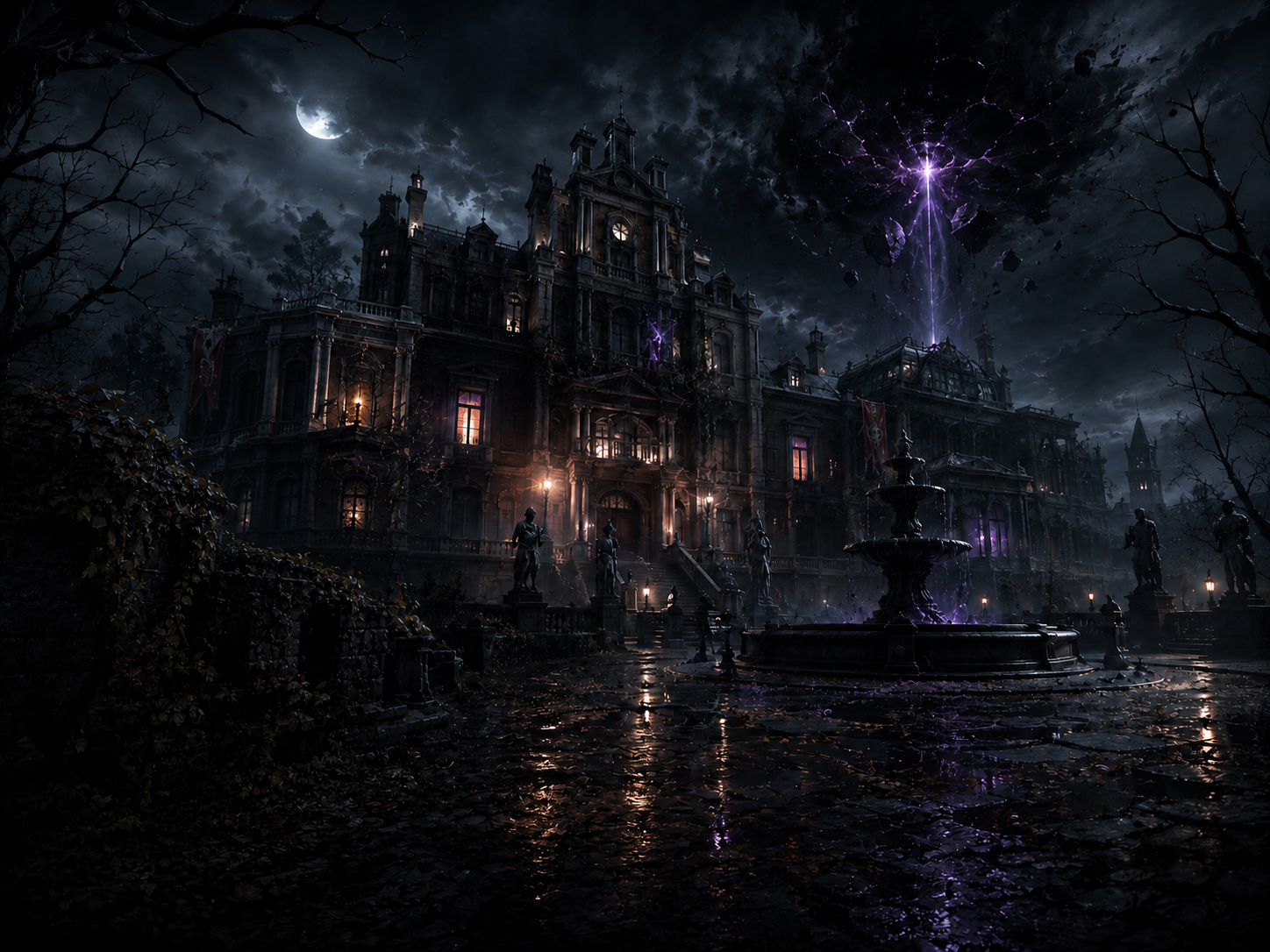
Beta v1.0.4.8 is available now and focuses on three areas that directly affect how players learn, pursue, and repeatedly play VEILBREAK: DEAD SIGNAL. Echoes of the Shadows now has its complete Guided Mode route, the existing Challenge menu has been rebuilt around a tiered progression structure, and the Haymaker has received a targeted balance pass. These changes are connected by the same objective: giving players clearer long-term direction without removing the pressure, experimentation, and build decisions that define the game.
Guided Mode is intended to make one of the game’s largest Main Quests understandable without reducing it to a shortened or mechanically incomplete version. Tiered Challenges are designed to replace the old all-or-nothing structure with goals that recognise meaningful progress before the final requirement is reached. The Haymaker changes address a weapon that had become so efficient that it was beginning to remove the need to consider other shotguns, several ordinary weapon categories, and—in some situations—even the map’s intended Wonder Weapon route. None of these changes are intended to make the game passive. They are intended to make difficulty, progression, and power easier to read.
Guided Mode for Echoes of the Shadows Is Now Available
Guided Mode support has now been released for Echoes of the Shadows. The mode is built for players who want to understand the Voss Estate’s full Main Quest through clear objectives, controlled round progression, and stronger interaction guidance. It does not remove the map’s core systems, skip the personal Echo Trials, or replace the final confrontation with a simplified encounter. Players still need to restore the four Conduit Runes, activate the Shadow Dynamo, rebuild access to the Umbra Forge, complete the Mourning Bloom sequence, empower Ilyana Voss through the Rune Clocks, restore all three Threefold Relics, complete the four character Echo Trials, prepare the Shadow Anchors, perform the Moonless Coronation, and survive the First Shadow.
The difference is in how the map communicates those requirements. Guided Mode displays a concise current objective, highlights the relevant area when a step would otherwise require blind searching, and caps round progression during important investigation stages. These round caps are not designed to remove all combat. Enemies continue to apply enough pressure that the player must maintain a usable build, protect interactions, and understand room routes. The cap exists so a player learning a Rune Clock pattern or trying to locate a newly opened quest route is not punished by endlessly increasing health and speed while standing still to understand the objective.
Guidance changes communication—not the quest itself.
Every major system and encounter from The Threefold Echo remains present. Guided Mode identifies the active objective and teaches the logic surrounding variable clues, but it does not simply display every final answer. A symbol sequence still needs to be read, a defense still needs to be completed, and a boss phase still needs to be survived. The goal is to help players learn why an interaction works so that a later Standard run feels achievable rather than memorised without context.
Standard and Guided Remain Distinct
Completing the Main Quest through Guided Mode unlocks the Echoes of the Shadows ending cinematic and records a Guided completion on the player profile. Standard Mode continues to maintain its own completion record for players who solve The Threefold Echo without direct objective guidance. This distinction allows Guided Mode to teach the map and provide a complete story experience without making the discovery-focused Standard achievement meaningless.
Guided Mode also remains compatible with normal progression. Players continue to earn Account XP, Weapon XP, Oath XP, Challenge progress, and eligible unlocks while playing. The round caps reduce the value of using Guided Mode as an unrestricted high-round farming method, but they do not turn the playlist into a non-progression tutorial. The time spent learning the Voss Estate should still contribute to the wider profile, especially when that time includes a full Main Quest completion.
Challenges Have Been Rebuilt Around Tiers
The Challenge system has been changed from a collection of mostly single-state objectives into a tiered progression system. Under the previous structure, many Challenges remained visually untouched until one large requirement was completed. That made steady progress feel invisible and caused the archive to become increasingly difficult to read as more weapon, enemy, map, Oath, and mode goals were added. In some cases, the All category could also display a completed state on a Challenge that had not actually satisfied its full requirement. The new system is designed to solve both the motivational problem and the presentation problem.
Most repeatable or long-form Challenges now contain three progressive tiers. Completing the first requirement immediately awards its listed reward and advances the same Challenge card to the next target. The interface shows the active tier, current numerical progress, the next threshold, and whether the final tier has been completed. A Challenge is only marked as fully complete once its final tier has been satisfied. This means the All page can no longer treat an early milestone as though the entire objective has been finished.
Initial Milestone
An approachable target that introduces the objective and gives players an early reward for engaging with the system.
Established Progress
A longer requirement that recognises continued use of the weapon, Oath, map system, enemy counter, or playlist.
Full Completion
The demanding final target. Reaching this tier completes the Challenge and contributes to category mastery records.
The system is being applied across Combat, Weapons, Oaths, Maps, Main Quests, Modes, and Career categories. Not every objective needs three tiers. Unique discoveries, one-time Easter Eggs, and highly specific Dark Ops-style accomplishments can remain single-stage because dividing them would weaken the moment of completion. Tiering is used where an objective naturally represents accumulated play, not simply because every card needs to look identical.
Progress Migration and Rewards
Existing profile progress is carried into the new tier structure wherever the original Challenge tracked a compatible statistic. A player who had already accumulated critical eliminations, completed rounds, used an Oath, defeated a specific enemy type, or progressed through a weapon category will not be asked to begin from zero simply because the presentation has changed. The game compares the saved total against all new thresholds, awards any tiers already earned, and places the Challenge on the next incomplete requirement.
Each completed tier provides an immediate reward, generally through XP, Scraps, or progression toward a connected mastery category. Final tiers can carry the larger identity rewards, including calling cards, emblems, or other profile-facing recognition. This lets the system reward regular play without making the most distinctive completion reward trivial. The Challenge details panel now explains every tier before the player begins, so there is no hidden escalation where a completed target suddenly reveals a much larger requirement with no warning.
The All category now reads the final tier state rather than a temporary milestone flag. Challenges should no longer appear permanently completed when only part of their progression has been satisfied.
Haymaker Balance Changes
The Haymaker has been one of the clearest balance outliers in the current beta. Its close-range damage, sustained fire, and practical reload cycle allowed it to solve too many different types of pressure with too little investment. A strong shotgun is not a problem by itself; the Haymaker is supposed to feel forceful and dependable at close range. The problem was that its strengths remained too complete after enemy health increased, making several other shotguns feel like temporary weapons and allowing the Haymaker to retain elite-killing, crowd-clearing, and emergency-defense value at the same time.
Beta v1.0.4.8 reduces that dominance without changing the weapon into a weak or frustrating choice. It remains a fast-firing shotgun with excellent close-range control, but players will need to respect its reload window and invest more carefully in rarity and Forge tiers if they want it to remain central to a late-round build.
Overall damage has been reduced across the weapon’s progression curve. The Haymaker remains powerful at close range, but it should no longer outperform specialised alternatives across nearly every round and enemy type.
The full reload sequence has been increased by approximately three seconds. Emptying the weapon now creates a meaningful vulnerability instead of functioning as a nearly consequence-free reset between groups.
Movement speed while reloading has been increased. Although the reload itself takes longer, players retain more control over positioning and can create space rather than being locked into an excessively slow retreat.
Why the Haymaker Was Changed This Way
We deliberately avoided solving the Haymaker problem by only cutting damage until the weapon stopped being enjoyable. A numerical reduction was necessary, but damage alone would have created a flat weapon that still felt structurally identical while simply taking more shots to achieve the same result. Extending the reload introduces a clearer rhythm: the Haymaker can produce intense short-range pressure, but using the entire magazine creates a period that must be planned around. Increasing movement speed during that reload prevents the new weakness from becoming arbitrary punishment. The player has less immediate firepower, but more agency to rotate, retreat, use equipment, activate a Field Upgrade, or move toward a teammate.
This is the kind of balance direction we want to use across the weapon roster. A strong weapon should remain strong in the area that defines it, while its limitations create reasons to consider other options. The Haymaker should be an aggressive close-range shotgun, not the automatic answer to ordinary hordes, elites, confined objectives, and late-round survival simultaneously. Wonder Weapons should also remain the centre of the most powerful map builds. An easily acquired ordinary weapon can be excellent, but it should not make the Staff of Wonder or Noah’s Superistic Folly feel optional because it offers comparable answers with fewer requirements.
What We Are Watching Next
We will monitor Guided Mode completion failures, Challenge migration, tier reward delivery, and Haymaker performance after players have had time to use the update. In particular, we are watching whether any Echoes objective becomes unclear when the quest changes state, whether a converted Challenge can become stuck between tiers, and whether the Haymaker’s longer reload creates enough risk without making the weapon feel unusable in solo play. Future changes will be based on those results rather than an expectation that the first values will automatically be perfect.
Guided support is an important step toward making the full Main Quest library accessible to more players, while tiered Challenges establish a cleaner foundation for long-term progression. The Haymaker changes are smaller in scale, but they are equally important to the health of the game: a weapon roster only remains interesting when power has shape, investment matters, and one ordinary weapon does not erase every competing choice.
© / ™ / ® 2026 Mob Productions.
VEILBREAK: DEAD SIGNAL is currently in public beta and releases in full on November 5, 2026.